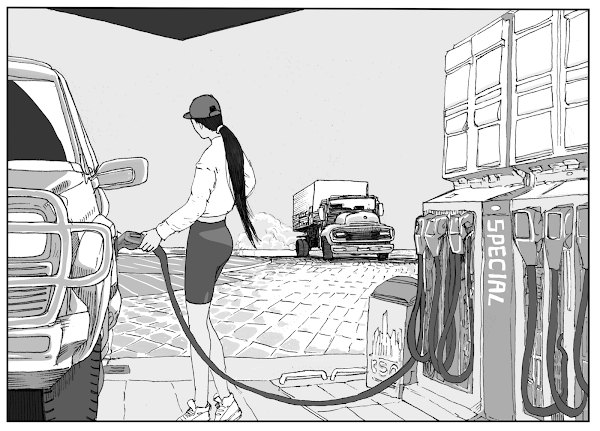
(I read Kazuo Ishiguro's 'The Unconsoled' earlier this year, and this short piece is inspired by the style of that book.)
"Have you ever been to India? Is this your first time here?" The woman seated across me on the other berth asks. She looks like an Elizabeth. But her name is Gladys.
"No, I grew up in India. I was born in India actually. But I live overseas now," I reply.
"It's my second time here in the country," she says.
She gazes out the train window, putting her hand on the frame. We are now leaving West Bengal, approaching notorious Orissa and Bihar.. Notorious - atleast that's how the media puts it. And I have no intention of trying to prove whether that is a true assumption or not. Tomorrow I will be seeing the blistering mountains in the blistering merciless Indian summer sun - my favourite part of the country. Sugarcane drinks in the sun. Nothing quite like it.
"Now you have a highly romanticised idea of your home country." Gladys says, her eyes gazing out the window. She is squinting because the sun is harsh.
"What are you talking about?" I demand. She looks at me and smiles.
"You are thinking about the Himalayas. And sugarcane juice in the sun. And birds and dragonflies."
"And am I wrong?"
"You're not wrong." She comes across the aisle and sits beside me. She is in no hurry. She will get off at Mughal-Sarai station on her way to Varanasi. From there she will meet some friends, a couple from Pennsylvania and another couple from Lucknow and maybe one or two mates from Varanasi. She will then retire to a shanty old hotel with no hot water - but overlooking a busy market street that belch a perennial stream of oil fumes and dust. So she will put on a scarf made of Banaras silk and cover her mouth while she closes the window.
"You're not wrong in your reading of me too." She smiles, "I am going to Varanasi and will put up at a hotel overlooking the street."
"What is your name?" I hold out my hand. She takes it.
"Gladys." She replies, almost whispers.
"You're strange. What are you doing in India?"
She laughs.
"I am part of India. The blistering Punjab sun - the cold wasteland of Kashmir - the green fields of Kerala - the tea slopes of Darjeeling - the thundering rains of Meghalaya - I am India."
"Snap out of it. Do you want a drink of tea?"
A tea vendor had appeared calling, "Chai chai chai!"
"Yeah, but I will pay for it. I will not have a stranger pay for my tea!"
So I let Gladys pay for the tea. Five Rupees each.
"So what brings you to India?" I ask her. She takes a long sip and looks out the window again. Thinking she must not have heard my question I open my mouth to ask her a second time when she lifts a finger to silence me.
I remain silent as we pass through the tea estates of Bengal.
"Have you ever been to India? Is this your first time here?" The woman seated across me on the other berth asks. She looks like an Elizabeth. But her name is Gladys.
"No, I grew up in India. I was born in India actually. But I live overseas now," I reply.
"It's my second time here in the country," she says.
She gazes out the train window, putting her hand on the frame. We are now leaving West Bengal, approaching notorious Orissa and Bihar.. Notorious - atleast that's how the media puts it. And I have no intention of trying to prove whether that is a true assumption or not. Tomorrow I will be seeing the blistering mountains in the blistering merciless Indian summer sun - my favourite part of the country. Sugarcane drinks in the sun. Nothing quite like it.
"Now you have a highly romanticised idea of your home country." Gladys says, her eyes gazing out the window. She is squinting because the sun is harsh.
"What are you talking about?" I demand. She looks at me and smiles.
"You are thinking about the Himalayas. And sugarcane juice in the sun. And birds and dragonflies."
"And am I wrong?"
"You're not wrong." She comes across the aisle and sits beside me. She is in no hurry. She will get off at Mughal-Sarai station on her way to Varanasi. From there she will meet some friends, a couple from Pennsylvania and another couple from Lucknow and maybe one or two mates from Varanasi. She will then retire to a shanty old hotel with no hot water - but overlooking a busy market street that belch a perennial stream of oil fumes and dust. So she will put on a scarf made of Banaras silk and cover her mouth while she closes the window.
"You're not wrong in your reading of me too." She smiles, "I am going to Varanasi and will put up at a hotel overlooking the street."
"What is your name?" I hold out my hand. She takes it.
"Gladys." She replies, almost whispers.
"You're strange. What are you doing in India?"
She laughs.
"I am part of India. The blistering Punjab sun - the cold wasteland of Kashmir - the green fields of Kerala - the tea slopes of Darjeeling - the thundering rains of Meghalaya - I am India."
"Snap out of it. Do you want a drink of tea?"
A tea vendor had appeared calling, "Chai chai chai!"
"Yeah, but I will pay for it. I will not have a stranger pay for my tea!"
So I let Gladys pay for the tea. Five Rupees each.
"So what brings you to India?" I ask her. She takes a long sip and looks out the window again. Thinking she must not have heard my question I open my mouth to ask her a second time when she lifts a finger to silence me.
I remain silent as we pass through the tea estates of Bengal.